Southern Interior Land Trust
  • Home
Southern Interior Land Trust
  • About SILT
  • Properties
    • Conservation Lands
    • Become a Property Steward
    • Conservation Properties Web Map
  • Projects
  • Contact
  • Links
  • Donate
    • Make a Donation
    • View Your Dashboard
    • View Donor Wall
  • e-News Sign-up
    • Blog
  • Directors
  • Home

SILT NEWS

Home > News > Wildlife
31
Oct
Supporting Land Conservation

By: Judie Steeves

Conservation

Comments: 0

There are many ways you can support land conservation

Land trusts always seem to be in fund-raising mode to purchase properties that have special features essential to wildlife, but acquiring the property is only the first step.

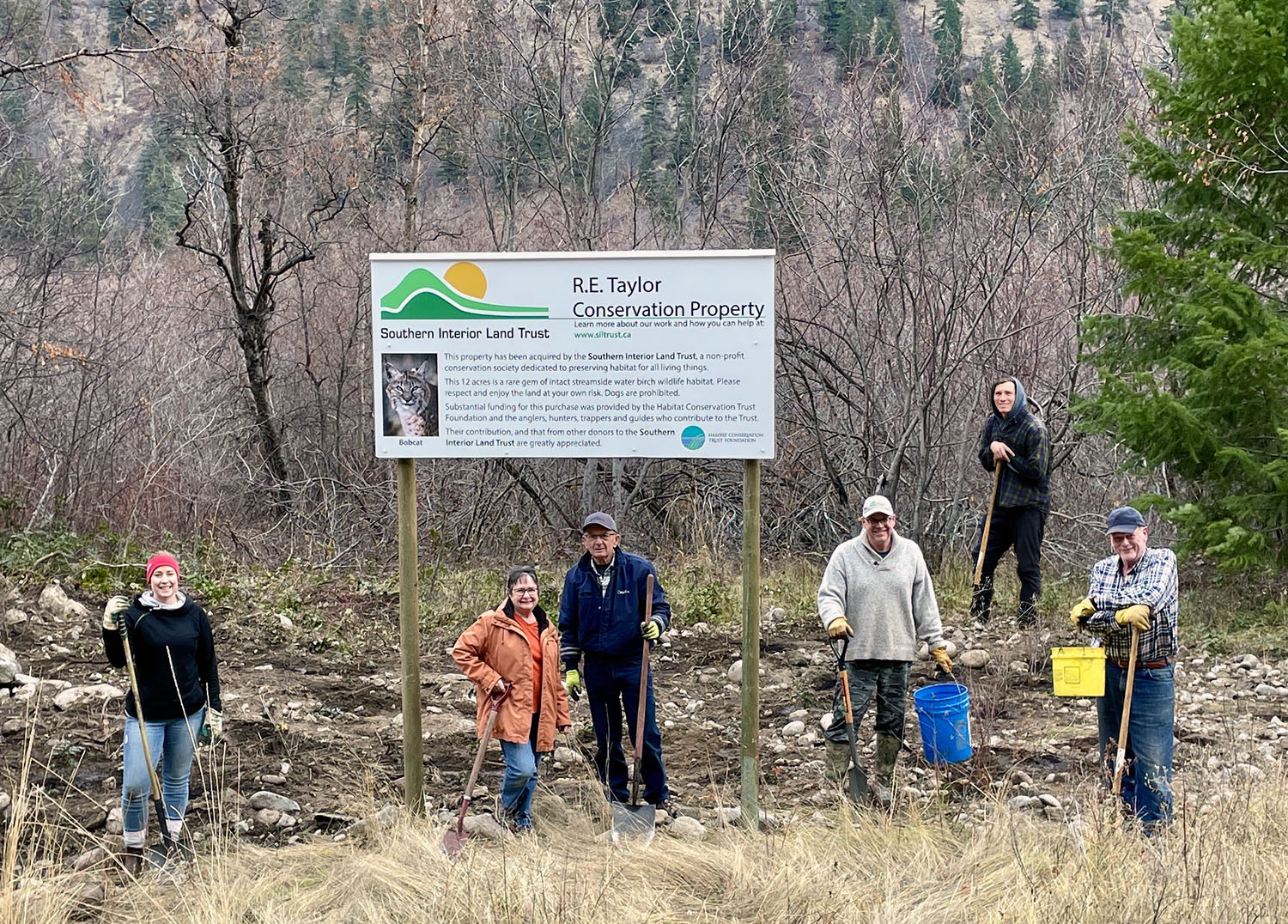
Once a property is acquired, it needs to be managed and sometimes restored to maintain the ecological values for which it was protected. That includes putting up fences to keep cattle out, installing signs and gates to guide public use, or replanting native species to support wildlife. These kinds of maintenance and restoration efforts all come at a cost.

The Southern Interior Land Trust (SILT) was formed in 1988 to purchase land for wildlife in the southern interior of BC. SILT is run by a volunteer board of directors and a part-time contracted executive-director, operating with minimal resources. SILT stewards seven conservation properties without any regular government funding and no endowment to support its daily operations.

Ironically, SILT’s responsibility to steward its lands sometimes extends to defending their natural features from the public—which, after all, is the ultimate beneficiary of the land conserved. Beyond management, SILT also takes its responsibility seriously to defend the sanctity of natural features essential to wildlife on the lands we conserve, notes President Judie Steeves.

Conservation lands are often secured with public donations and SILT has a responsibility to protect the habitat values for which the lands were acquired, including large standing dead or dying trees, known as wildlife trees, and other valuable features such as wet areas and winter range, bunchgrass meadows, fresh water, wetlands, craggy outcroppings, and tree cover, or south-facing slopes that green up early in spring.

“The public is welcome to enjoy nature on our conservation lands with common-sense restrictions such as no motorized vehicle use, which causes damage to the ecosystem,” she explains.

“Stewardship of conservation lands can be expensive, but we are diligent about ensuring habitat values on our properties are conserved, and the public can be assured we will continue our commitment to safeguard those values forever,” states executive-director Al Peatt. “To be effective, land trusts across Canada need an improved mechanism to better fund defence of their conservation properties.”

Conserving biodiversity is a responsibility we all share, he believes.

Earlier this year, SILT became one of the first land trusts in Canada to receive Conservation Excellence Certification from the national Centre for Land Conservation. The achievement demonstrates SILT’s commitment to best practices for conserving land, notes Steeves.

Supporting SILT ensures these conservation standards continue across our properties.

How you can help

SILT relies on community donations to support the work it does to conserve habitat for wildlife. One way you can help is to become a property steward. Simply visit https://siltrust.ca/become-a-property-steward, select a zone on the map to become a steward of that piece of property; and make a donation. Your sponsorship will help support that property for 12 months from the date of your gift.

You’ll receive a stewardship certificate and a tax receipt. It’s a meaningful gift for someone who loves the outdoors, or in memoriam for a lost loved one. All donors are featured on our online donor wall in recognition of their commitment. Every contribution ensures these lands are cared for, helping SILT protect wildlife habitat now and for generations to come.

You can also choose to donate your time or property to help SILT conserve land and wildlife in your community. Email office@siltrust.ca for more information.

Media Contact:

Al Peatt, Executive Director
Southern Interior Land Trust
apeatt@siltrust.ca
(250) 328-4699

California bighorn sheep, like this ram, are among the many beneficiaries of some of SILT’s conservation lands, enjoying the protected habitat with their families.

Photo Credit: Judie Steeves
31
Oct
Edwards Pond – Painted Turtles

By: Payton Maffioli

Ginty's

Comments: 0

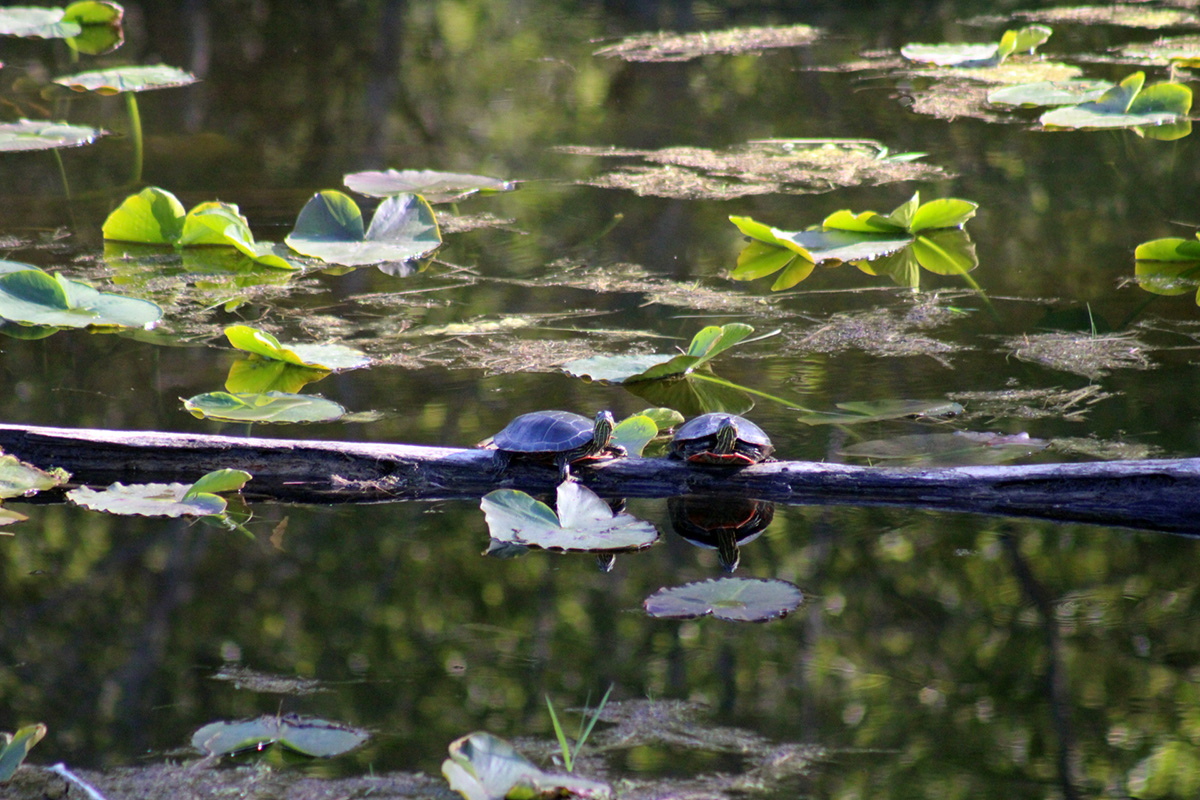
Edwards Pond has always held a special place in my heart; my mom would bring me to the pond almost every weekend during the late spring and summer months to observe the unique ecosystem full of flourishing wildlife, with our eyes keen on spotting the painted turtles (Chrysemys picta), peacefully soaking up the warm sun on their favourite logs. More often than not, we would come across many turtles stuck between the tracks of the railway that runs right through the riparian area, and some weren’t that lucky due to factors such as train strikes, ease of capture for predators, and dehydration. It was so disheartening to come across the ones that didn’t make it, and to make the situation of their vulnerable status worse, the Intermountain-Rocky Mountain population is a species-at-risk, federally listed as ‘Special Concern’. 

During my time at Selkirk College, I intensively researched Edwards Pond and explored the possibilities of habitat restoration and the protection of the painted turtles for my graduating project. With the help of SILT’s Executive Director, professional biologist Al Peatt, I was able to form a restoration plan from my findings at the site. Edwards Pond is a 50-acre property that was purchased by SILT in 1991. This beautiful wetland was once an oxbow of the Kettle River, and is home to cottonwood forests, blue heron, black bears, white-tailed deer, and Columbia-spotted frog. The conservation of this area is critical because it is one of the last shelters in the valley for painted turtles to breed and hibernate safely. 

Unfortunately, the property has been riddled with invasive species of plants and animals; spotted knapweed is a notoriously stubborn weed, and was found to be a major problem for painted turtle nests, as the roots ultimately suffocate the delicate eggs within the gravel. Other than spotted knapweed, brown bullhead have invaded the pond during freshet season, and are an apex predator that, when given the opportunity, will prey on hatchlings. Sightings of brown bullhead were confirmed during my observations, as a blue heron was hunting them in the shallows in November of 2023. In addition to invasive species, native species such as the American river otter and striped skunk frequently dig up turtle eggs, given that their nesting sites are typically along the gravel shoulders of Gilpin Road or the railroad tracks. The final blow to painted turtles, and all life on Earth, is the inevitable looming of climate change. 

As summers in Grand Forks get hotter, the frequency of droughts arise and has been directly impacting Edwards Pond. Without a reliable water source, the pond has been drying up, leaving the river as the turtle’s only option with the habitat being not as suitable as the wetland. But not all is lost, there are a few viable solutions that could potentially stabilize their population. 

Invasive weed removal is the easiest way to manage and protect nesting habitat. The safest method of removal for the ecosystem is manual removal by uprooting the plants in the spring before they go to seed. Considering overall habitat, it may be useful to consider constructing another inflow into the pond from the river that stays consistent throughout the summer, so the pond doesn’t dry up. Creating a stable and suitable habitat for all wildlife, not just turtles, will bring more fish-eating birds such as blue herons, osprey and bald eagles, which can help manage the brown bullhead population. Bullheads are an aquatic apex predator, and can survive without a sufficient amount of water or oxygen for a long period of time, making them incredibly resilient to droughts, and what would be beneficial is having native predators thriving in their natural habitat making it more likely that they’ll prey on these fish in a healthy ecosystem. 

Finally, the most difficult management plan would be putting safe turtle crossings between the railroad ties so turtles can escape which would prevent more deaths in this vulnerable population. This is a hard task because an assessment needs to be done by the engineers of OmniTrax, and then it has to be approved by the company. In Japan, railway turtle crossings have been extremely beneficial for the turtle populations, saving thousands of individuals from being struck by trains. 

The future of Edwards Pond relies on a community commitment to the conservation of the property through stewardship and education. SILT has done an incredible job of protecting the area from degradation and further damages, and I have much hope for our beloved painted turtles.


28
Jun
Help Protect Okanagan Lake and Create a Corridor For Wildlife

By: Gordon Wilson

Okanagan Mountain Park

Comments: 0

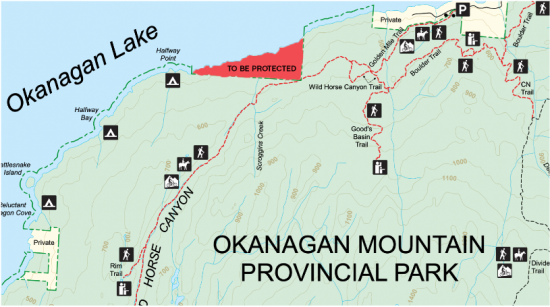
Join us in supporting the B.C. Parks Foundation in its efforts to conserve 151 acres of waterfront private land, surrounded by Okanagan Mountain Provincial Park.

The foundation has already raised all but $750,000 of the $4 million required to complete the deal, but the remainder must be raised before the closing date on the offer to private owners of July 15.
The alternative is development of this beautiful parcel of land, located across from Peachland.

The SILT board has unanimously voted to offer its support to the foundation, but the land trust is not in the business of contributing money to other causes, but in conserving land for wildlife and restoration work for lands already in its portfolio.

But, we can inform and encourage our supporters to lean more about this opportunity to protect this key part of the puzzle which could provide a corridor of connectivity from the border north through Kalamalka Lake Provincial Park for wildlife.

As wildflowers, grasslands and forest are rapidly being lost to concrete and asphalt in the Okanagan, it’s vital that we set aside some wild land so our children’s children will know what this valley is like naturally, and so some wild critters can continue to survive.

Learn more about this opportunity and donate whatever you can at:

https://bcparksfoundation.ca/projects/parks-bank/okanagan-mountain-park/

27
Aug
Southern Interior bighorn sheep decimated by disease

By: Gordon Wilson

Bluetongue sheep

Comments: 0

Twenty wild bighorn sheep were recently found dead near Grand Forks. They have determined the sheep died from bluetongue, also known as epizootic hemorrhagic disease, a virus caused by mites which has no specific treatment.

Though the catastrophic loss of cherished wildlife is indeed unfortunate, it does not affect the habitat value of SILT’s conservation properties.  In fact, this occurrence highlights the importance  of acquiring and maintaining quality wildlife habitats in places where wildlife may thrive. It will take time for the Grand Forks bighorn sheep herd to recover.

In the meantime, SILT will remain committed to managing its Grand Forks Grasslands property to benefit wild sheep and other wildlife. SILT looks forward to cooperating further with its conservations partners, including the Wild Sheep Society of BC, to help the Grand Forks bighorn sheep herd recover as quickly as possible.

Castanet Article

Photo: BC Wild Sheep Society

  • 1
  • 2
  • 3
  • …
  • 6
Sidebar
Latest News
Low Water At Ginty’s Pond Highlights Need For Continued Investment In Watershed Restoration 13 Jan 2026
Resolution of Edward’s Pond Tree Litigation 08 Jan 2026
nʔaʕx̌ʷt – Ginty’s Pond Wetland Restoration 09 Dec 2025
Vehicles & Dumping are Damaging Habitat 09 Dec 2025
Supporting Land Conservation 31 Oct 2025
Edwards Pond – Painted Turtles 31 Oct 2025
Recent Comments
    Categories
    • accordian
    • BioBlitz
    • Clean Nature
    • Ecology
    • Education
    • Environmental
    • Fish
    • Habitat Damage
    • Holdstock Scholarship
    • Land Acquisition
    • Litigation
    • Non Profit
    • Organization
    • ORWHFS News
    • SILT News
    • Species at Risk
    • Volunteers
    • Webinar
    • Wild Life
    • Wildlife
    Tags
    Amphibians Badger Basket Weaving BCWF bighorn BioBlitz Board of Directors Bourguiba Cattle Cawston Cold Creek Conservation deer DL492 Donations Edwards Pond Gilpin Ginty's Ginty's Pond Grand Forks Grassland Habitat Habitat Damage Holdstock Law Suit Lawsuit Lighthawk Love Your Lakes Management Plan nʔaʕx̌ʷt Oceola Okanagan Mountain Park Remembrance Reptiles Restoration scholarship sheep Snake species at risk Species ID Thanks-You webinar Wetland Wetlands wildlife
    Southern Interior Land Trust

    Formed in 1988 to purchase land for wildlife in the Okanagan Region, the board of the Southern Interior Land Trust Society, (formerly, Okanagan Region Wildlife Heritage Fund Society) aims to conserve and restore wild land as habitat for wildlife, since it is under increasing pressure from development.

    Quick Links

    • Home
    • About SILT
    • Contact
    • SILT Lands
    • SILT Links
    • SILT Projects
    • SILT Privacy Statement
    • ArcGIS Property Mapping

    GET IN TOUCH

    521 Vardon Lane

    Vernon, BC V1H 1Y4
    250-328-4699
    apeatt@siltrust.ca

    Copyright © Southern Interior Land Trust. All rights reserved.

    Powered By: Cutting Edge Concepts